Durum Flour
Triticum turgidum durum
Durum wheat has the same tetraploid genetic ancestry (28 chromosomes) as Emmer wheat. it also has the glumes and the same growth habit as Emmer and represents a hybrid variant of this ancient wheat type. It is genetically a hybrid of the diploid wild wheat grass (Triticum urartu) and a genetic complex which is found in the European wheat grass Aegilops speltoides.
This species was known to have been growing in Central
Europe and the Near East around 7,000 BC. It has a very hard grain and
the word durum is Latin for hard. The protein and gluten content
of this variety is higher than most other wheats and it has been used
commercially for making pasta and semolina for centuries. It is known to
have been farmed at the end of the Mesolithic and continually from the Early
Neolithic throughout history.
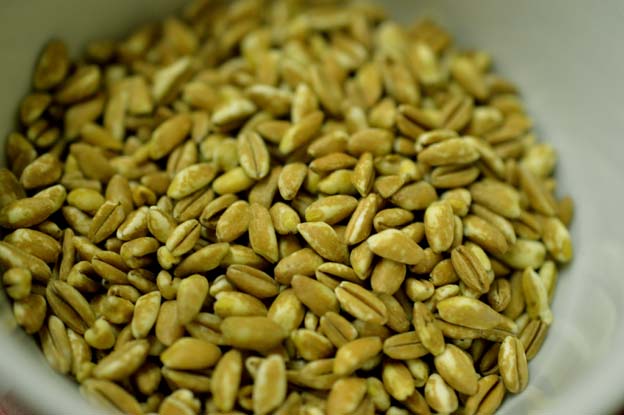
Durum wheat is commercially used for pasta making and when milled, it has a distinctive yellow colour and this is what gives pasta its colour. The grain is also called "macaroni wheat" and is known as "Khorani" in ancient Israel. Archaeologists in the past have identified this wheat as Triticum robus on Roman sites. This name is attributed to the red colouration of preserved grains, but modern analysis has identified this grain as Durum wheat.