Saxon and Norse Bread
The Anglo-Saxon period of British history begins in the 5th
century
with the exit of the Romans and continues until the 11th century and
the Norman Conquest of 1066. The Viking invaders started to have an
impact on Britain from the 7th century onwards, with the Norse becoming
more integrated into society towards the end of the period.
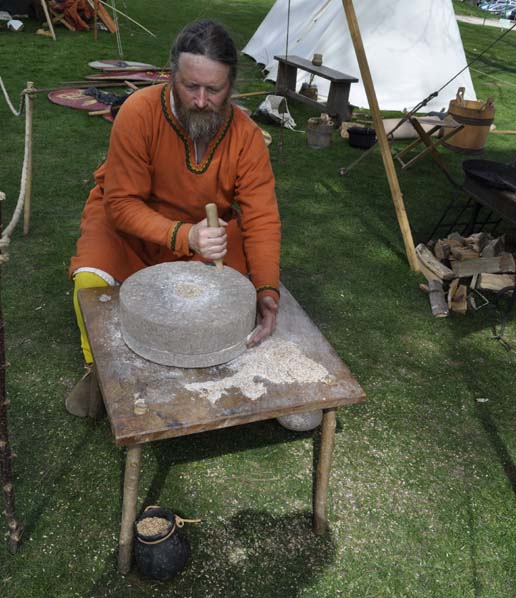
The bread baking methods and grain used by both Saxons and Vikings are
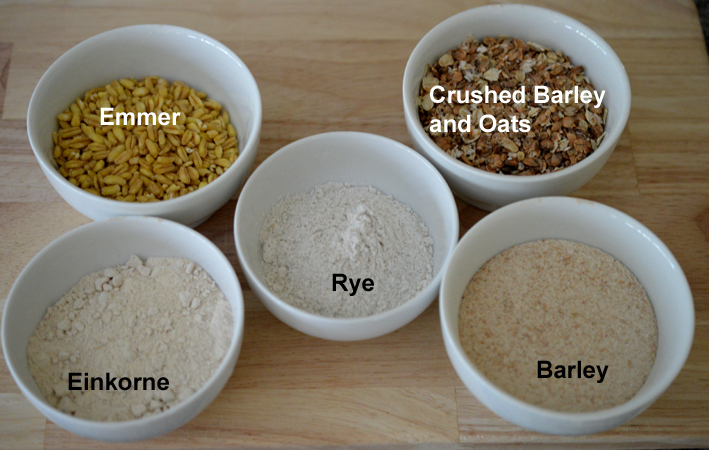
so similar as to an indistinguishable bread culture. The main grains
used in Northern Europe are barley, einkorn wheat and rye. Spelt wheat
becomes more commonly used as you move south in Europe.
 |
 |
The bread was enhanced using seasonally available and stored items like flax seed (Linseed), honey and herbs. Vikings were raiding Britain to supplement their poor harvests with pillaged food products. The climate in Norway and the availability of good farming land was insufficient to support the Norse population. Expansion was the only real option left to these people.
Most of the bread baking was done on skillets, griddles or flat fire pans. The wealthy would probably have a basic bread oven made of clay with the baking door at ground level. This is a development that persisted from Roman baking practices. Baking would have been done away from timber buildings to reduce the risk of fire hazards.
Nuts, stinging nettles,
flowers and leaves of herbs were often used as flavour enhancers in
bread. There would have been a great knowledge of the efficacy of such
food additives and their use in Saxon times. This is something that is
partly lost in modern times.
Download the following .pdf recipes
| Barley Flat Bread |
| Barley Bread |
| Saxon Pan Bread |
| Pan Bread |
| Oatcakes |
| Using Nettles |