19th Century Bread
The 19th Century was predominantly the Victorian Era with a wealth of commercially produced breads. Most people would buy bread in local shops and bakeries. The only people who generally baked their own bread at this time were people living in isolated communities.
With the introduction of efficient commercial ovens and kneeding troughs, Bakers were able to develop standard methods of bread production. Baking bread in uniform tins in well controlled ovens gave an even batch production that was consistent for sale.
The development of railways allowed people to travel more easily than ever before. With this freedom, the local and regional breads became more well known and with the development of new cook books and translations of French and Italian texts, the range of bread available at stores was expanding rapidly.
|
|
|
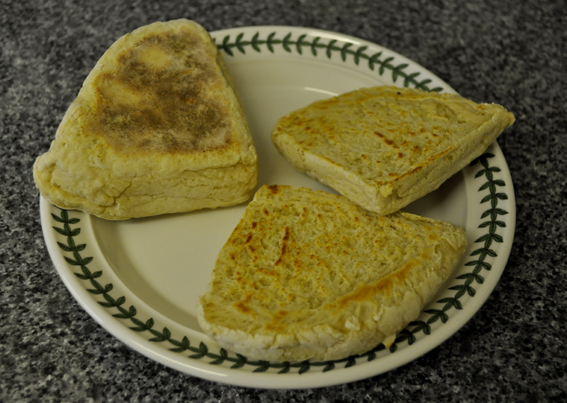

The large white loaf, muffins, current bread, french batons and bread rolls are becoming commonplace. Pikelets and oatcakes, hoagies and welshcakes were finding a place in the nation as a whole. By the latter part of the 19th century, the Devon split is a well known treat. Cottage loaves were also made to maximize the amount of bread baked in a typical home range oven.


Download the following .pdf recipes
| Devon Splits |
| Pannetoni |
| Canadian Trail Bread |
| Onion Bread |
| Cottage Loaf |
Salt-Raising Bread - a practice that has potential health issues.